
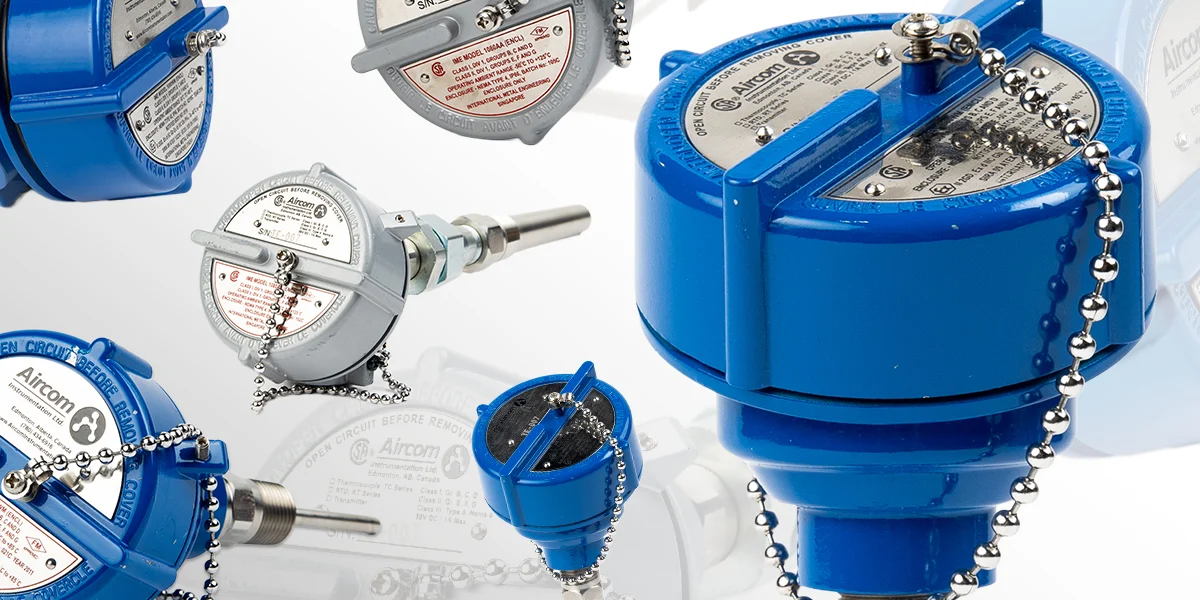
In industrial environments, accurate temperature measurement is not just a nice-to-have. It can affect product quality, process efficiency, equipment safety, and long-term reliability. Whether you are monitoring a process line, furnace, tank, exchanger, or rotating equipment, the quality of your temperature data depends heavily on selecting and installing the right sensor.
One of the most widely used tools for industrial temperature measurement is the thermocouple. Thermocouples are durable, versatile, and suitable for a wide range of process conditions, but getting accurate readings takes more than simply choosing a sensor and placing it in the process.
This guide explains the basics of thermocouples, common types, surface thermocouples, and best practices that help engineers, field operators, and maintenance teams improve measurement accuracy.
A thermocouple is a temperature sensor made by joining two different metals together to form a sensing junction. When that junction is heated or cooled, it produces a small electrical signal, known as an electromotive force or EMF, that corresponds to temperature. Aircom’s thermocouple overview explains that this signal has a predictable relationship to the sensing junction temperature when referenced against a known junction.
Thermocouples are commonly identified by letter types, such as Type K, Type J, Type T, Type E, Type N, Type R, Type S, and Type B. Each type uses a different metal pairing and is suited to different temperature ranges, environments, and accuracy needs.
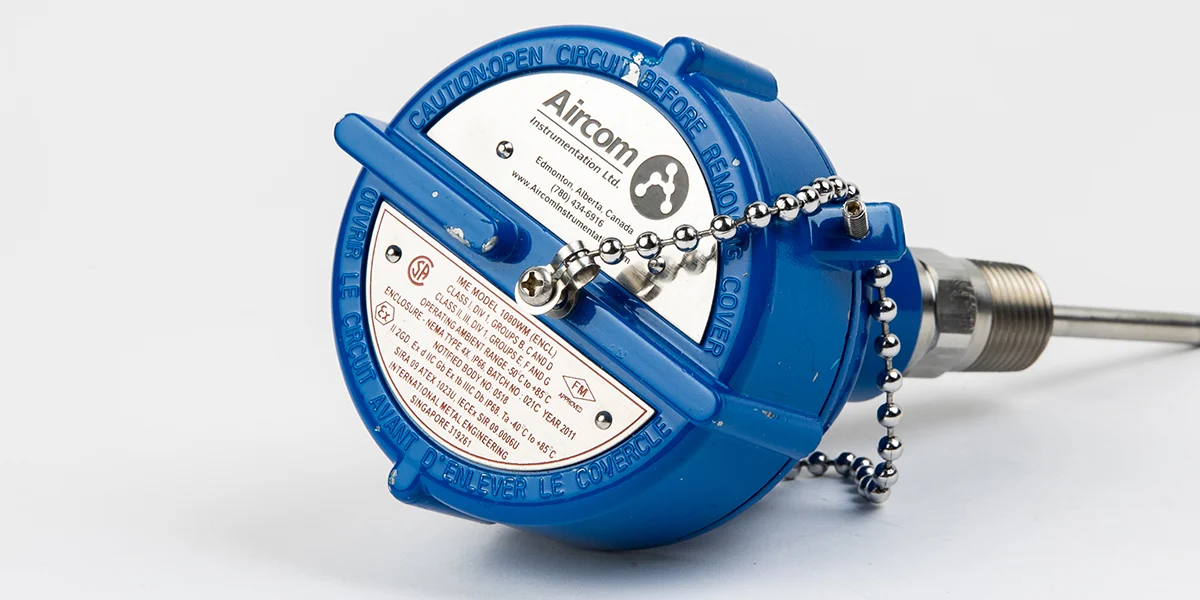
Thermocouples are popular in industrial environments because they are rugged, relatively simple, and suitable for broad temperature ranges. In practical terms, thermocouples are used because they can be adapted to many field conditions, including:
For engineers and operators, the key is not just asking, “Do I need a thermocouple?” It is asking, “What thermocouple design will give me the most reliable reading in this specific process?”
Choosing the right thermocouple type starts with understanding the application. Temperature range, chemical resistance, vibration, abrasion, response time, and installation requirements all affect sensor selection.
Type K is one of the most common industrial thermocouple types. It is widely used because of its broad temperature range and general-purpose performance.
Type J is often used in older equipment and moderate temperature applications. It is less suited to oxidizing environments at higher temperatures.
Type T is useful for lower-temperature applications and can offer strong accuracy for certain base-metal thermocouple applications.
Type N is often selected for better stability in high-temperature environments compared with some other base-metal thermocouples.
Types R, S, and B are often used in very high-temperature applications, including furnaces and specialized industrial processes.
Surface thermocouples are used when the temperature of a surface matters more than the temperature of the surrounding air or process stream. This can include pipe surfaces, vessel walls, heater tubes, equipment housings, or other solid surfaces.
Surface temperature measurement can be challenging because the sensor must make proper contact with the surface. Poor contact, improper mounting, air gaps, insulation effects, or heat loss through the sensor itself can lead to inaccurate readings.
Best practices for surface thermocouples include:
For applications where surface temperature accuracy is critical, sensor design and installation quality matter as much as thermocouple type.
The thermocouple type should match the process temperature range, environment, and accuracy requirement.
Temperature range is a primary selection factor, but pressure rating, process media, and environmental conditions also matter when designing a thermocouple temperature sensor.
Thermocouple junction style has a direct impact on response time, electrical isolation, and measurement stability.
Grounded junction thermocouples provide faster response because the junction is connected to the sheath, but they can be more susceptible to electrical noise in some installations. Ungrounded junction thermocouples are electrically isolated from the sheath, which can improve measurement stability where electrical noise is a concern, but response time is slower. Exposed junction thermocouples respond quickly but are generally better suited to clean, non-corrosive gas applications.
Thermocouples measure temperature based on voltage generated between dissimilar metals. When thermocouple wires connect to measurement hardware, additional junctions are created. Cold junction compensation is used to remove the effect of those unwanted junction voltages so the final reading is more accurate.
If cold junction compensation is incorrect, located near heat sources, or not properly configured, the reading may be wrong even if the thermocouple itself is working.
Thermocouple signals are small, so electrical noise can affect the measurement. Good wiring practices help protect the signal.
Field teams should consider:
The thermocouple probe is what protects the sensing element from the process. Choosing the wrong sheath material can lead to corrosion, failure, or drift.
Consider:
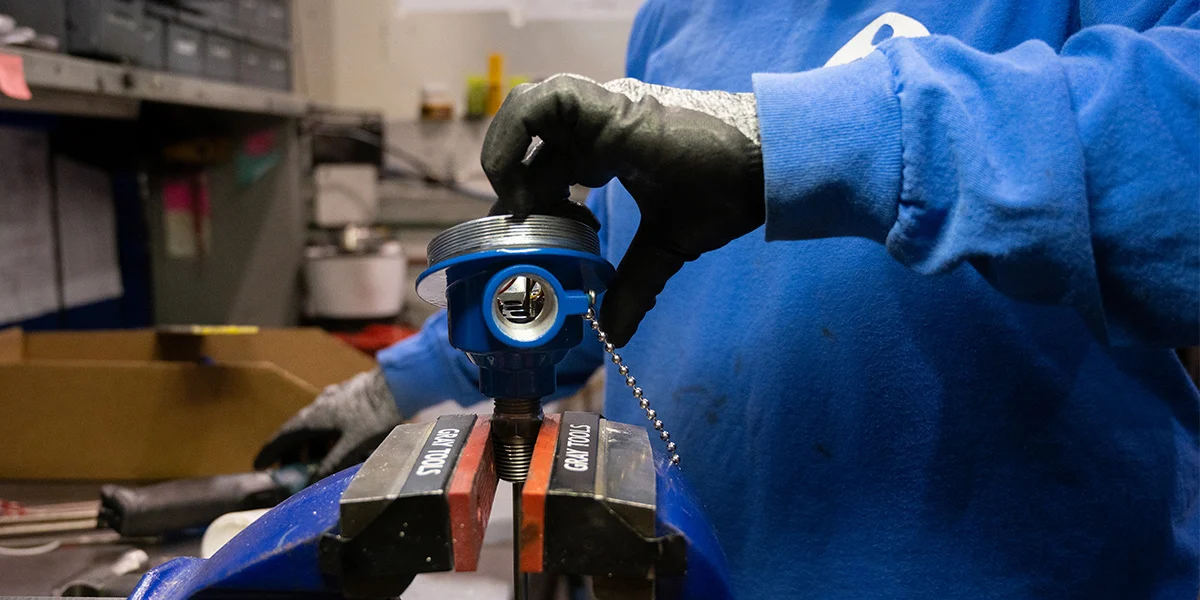
Even the right thermocouple can produce poor results if it is installed incorrectly.
Common installation mistakes include:
The goal is to place the sensing junction where the temperature needs to be measured, while protecting the assembly from conditions that can distort or damage the sensor.
Thermocouples should be checked periodically, especially in critical applications. ASTM E220 is a recognized standard test method for calibration of thermocouples by comparison techniques. ASTM E220 is considered one of the standards relevant to thermocouple materials and suppliers.
Routine verification helps catch drift, wiring issues, damage, or installation problems before they affect operations.
Thermocouple errors can come from the sensor, the environment, or the measurement system.
Common causes include:
The best way to prevent these issues is to treat the thermocouple as part of a full measurement system, not just a single part.
Aircom manufactures thermocouple sensor probes and assemblies for commercial and industrial applications. Aircom contributes to thermocouple technology by manufacturing thermocouples into usable temperature devices, including sensor probes and assemblies.
Aircom supports thermocouple selection and design by considering:
Key standards such as ASTM E230, ASTM E585, ASTM E220, and NIST Monograph 175, help support reliable thermocouple design and manufacturing practices.
For customers operating in demanding environments, the value of Aircom’s thermocouple assemblies comes from matching the sensor to the actual process, rather than relying on generic off-the-shelf options. That means helping customers choose the right type, construction, connection, sheath, and junction style for the job.
Learn more about Aircom’s Thermocouple Sensor Probes and Assemblies:
A thermocouple is used to measure temperature by generating a small voltage from two dissimilar metals joined at a sensing junction. It is commonly used in industrial process control, furnaces, piping systems, vessels, and equipment monitoring.
Type K is one of the most common thermocouple types because it offers a broad temperature range and general-purpose industrial use.
A grounded thermocouple has its junction connected to the sheath, allowing faster response. An ungrounded thermocouple is electrically isolated from the sheath, which can reduce noise-related measurement issues but typically responds more slowly.
Surface thermocouples measure the temperature of a solid surface, such as a pipe, wall, tube, or equipment housing. Proper contact between the sensor and the surface is essential for accurate surface temperature measurement.
Cold junction compensation removes the effect of unwanted junction voltages created when thermocouple wires connect to measurement hardware. Without it, readings can be inaccurate.
Choose the right thermocouple type, use the correct junction style, protect the sensor from noise, ensure proper cold junction compensation, select the correct sheath material, and install the sensor correctly.
Yes. Thermocouples can be calibrated or checked by comparison against a reference standard. ASTM E220 is a relevant calibration standard for thermocouples.
A custom thermocouple assembly can be designed around the actual process conditions, including temperature range, pressure, media, sheath material, installation constraints, and response-time requirements.