
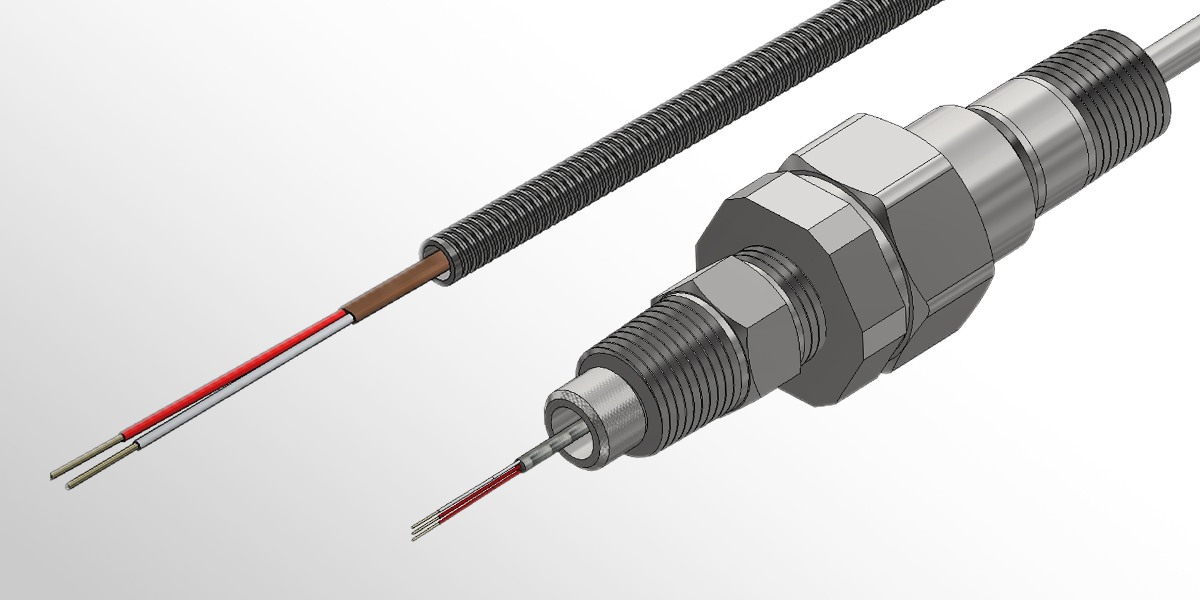
Surface temperature measurement plays an important role in industrial temperature measurement, especially when it is difficult or impossible to install a sensor directly inside a pipe, vessel, tank, or process line.
In these cases, a surface thermocouple or RTD can be attached to the outside of the equipment to monitor temperature trends, verify heat tracing, support freeze protection, or provide a non-invasive way to understand what is happening in the process.
They don’t naturally measure surface temperature; they measure their own temperature. Accuracy depends on how well you get the sensor to track the surface.
But choosing the right surface temperature sensor is not always simple.
Both thermocouples and RTDs can be used for surface temperature measurement, but they perform differently. Thermocouples are often faster, more rugged, and better suited for high-temperature applications. RTDs are generally more accurate and stable, but they are usually slower and more delicate.
The right choice depends on the application, the required accuracy, the temperature range, the process environment, and how the sensor will be installed.
A surface temperature sensor does not directly measure the process temperature inside the pipe or vessel. It measures the temperature at the point where the sensor is attached.
That means accuracy depends heavily on how well the sensor tracks the surface temperature.
For reliable surface temperature measurement, the sensor must make strong thermal contact with the surface. Poor contact, air gaps, wind, ambient temperature changes, insulation, radiation, or weak mounting can all affect the reading.
Common surface temperature measurement methods include:
In simple terms, the sensor needs to stay as close as possible to the true surface temperature, while being protected from outside conditions that could distort the reading.
Thermocouples and RTDs are both temperature sensors, but they work in different ways.
A thermocouple uses two dissimilar metals joined together. When the junction experiences a temperature change, it generates a small voltage that can be interpreted as temperature. Thermocouples are widely used because they are rugged, fast, and capable of handling a broad temperature range.
An RTD, or resistance temperature detector, works by measuring changes in electrical resistance as temperature changes. RTDs are known for accuracy, repeatability, and long-term stability, making them a strong choice when precision is important.
Both can be used for surface temperature measurement, but each has strengths and limitations.
Thermocouples are often the preferred choice for high-temperature surface measurement.
They can operate across a much wider temperature range than many RTDs, making them useful in demanding environments such as boilers, furnaces, fired heaters, exhaust systems, and other high-heat industrial processes.
RTDs are excellent for moderate temperature ranges, but they are not always the best fit for extreme heat or harsh mechanical conditions.
Best choice for extreme heat: Thermocouple
RTDs are generally more accurate and stable than thermocouples.
For applications where precision matters, RTDs are often the better choice. They provide strong repeatability and are less likely to drift over time compared to thermocouples.
Thermocouples can still provide reliable readings, but they may drift more over long periods, especially in harsh or high-temperature conditions.
Best choice for accuracy and stability: RTD
Thermocouples typically respond faster to rapid temperature changes.
This makes them a strong option for applications where temperatures shift quickly and the sensor needs to react fast. In surface temperature measurement, response time also depends on how the sensor is mounted. A poorly mounted thermocouple may still provide delayed or inaccurate readings.
RTDs are usually slower, but they can still be effective in applications where temperature changes are gradual and accuracy is more important than speed.
Best choice for fast response: Thermocouple
Thermocouples are generally lower cost and more rugged than RTDs.
They are often easier to use in demanding industrial environments where vibration, high heat, rough handling, and harsh operating conditions are common.
RTDs are more delicate and often cost more, but they provide better accuracy and stability when the application requires more precise measurement.
Best choice for rugged, lower-cost applications: Thermocouple
Best choice for precision and repeatability: RTD
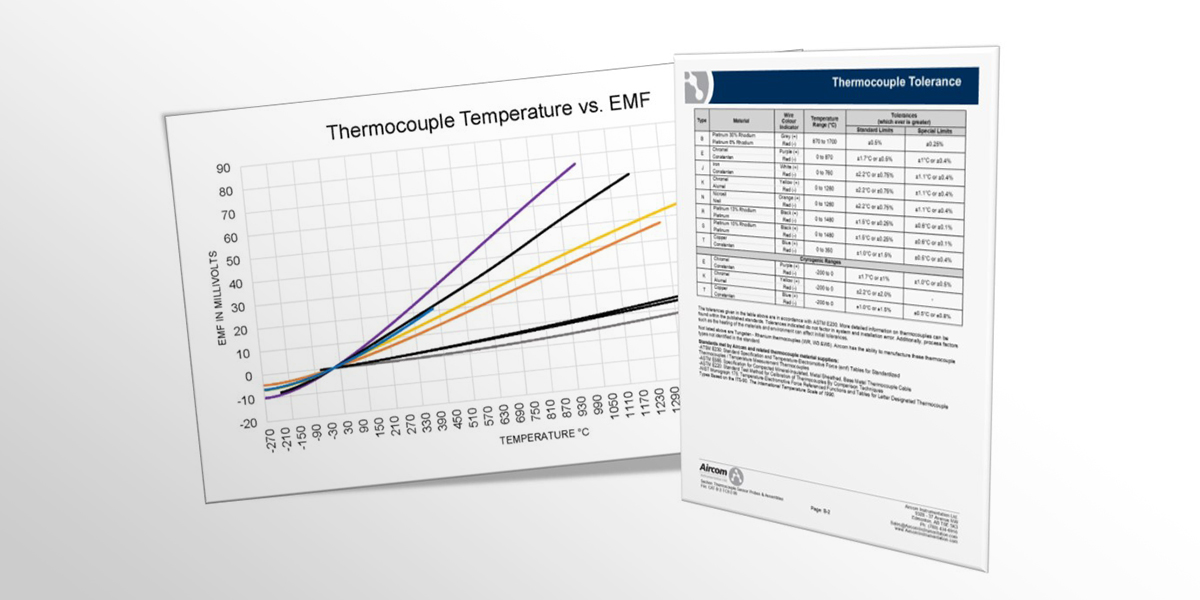
Thermocouple vs RTD Comparison Table
A surface thermocouple is often the better choice when the application requires speed, ruggedness, and high-temperature performance.
Use a surface thermocouple when:
Surface thermocouples are commonly used in applications such as boilers, heaters, process piping, exhaust systems, and high-temperature equipment surfaces.
Aircom manufactures thermocouple sensor probes and assemblies for demanding industrial environments, including custom options designed to match specific process conditions.
Learn more about Aircom Thermocouple Sensor Probes and Assemblies:
https://www.aircominstrumentation.com/thermocouple-sensor-probes-and-assemblies
A surface RTD is often the better choice when accuracy, repeatability, and long-term stability matter more than speed or ruggedness.
Use a surface RTD when:
RTDs are commonly used in process monitoring, equipment surface tracking, HVAC systems, controlled manufacturing environments, and applications where stable readings are important.
Aircom manufactures RTD sensor probes and assemblies designed for accurate and reliable temperature measurement across industrial applications.
Learn more about Aircom RTD Sensor Probes and Assemblies:
https://www.aircominstrumentation.com/rtd-sensor-probes-and-assemblies
Surface temperature measurement is useful, but it is not always the best option.
Because the sensor is mounted outside the process, it may not perfectly reflect the actual internal process temperature. The reading can be affected by pipe wall thickness, insulation, ambient conditions, wind, radiation, surface material, contact quality, and temperature gradients.
Surface temperature measurement may not be recommended when:
A simple rule of thumb: surface temperature measurement is often suitable for indication, trending, freeze protection, heat tracing verification, and non-critical monitoring. If the temperature is being used for safety, control, or guaranteed performance, an immersion-style measurement is usually preferred.
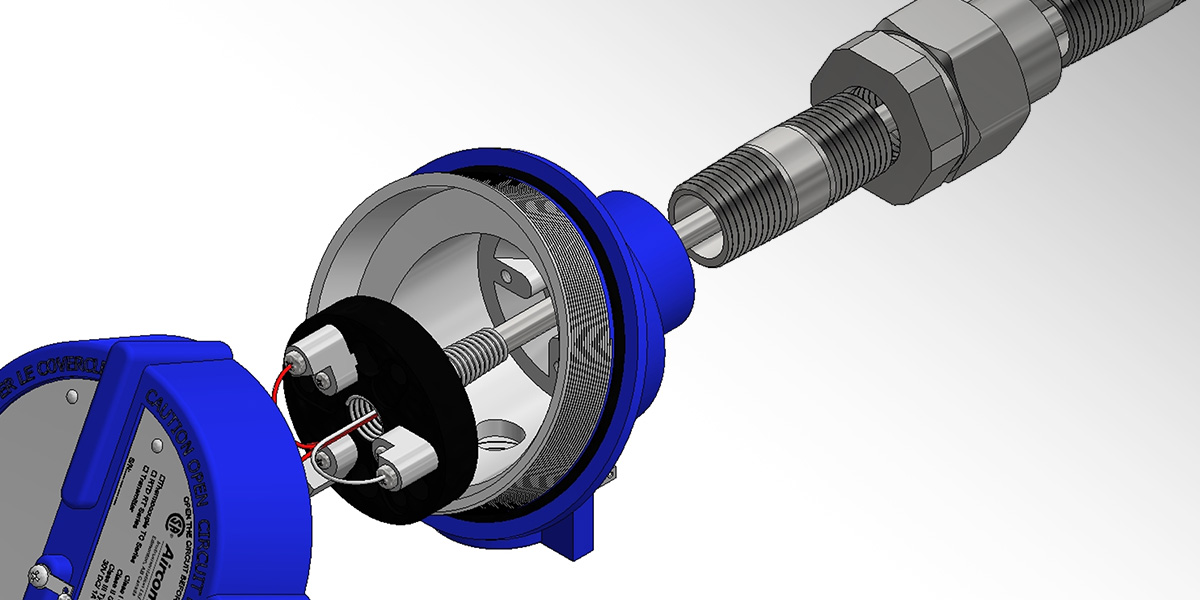
Whether you choose a thermocouple or RTD, installation quality is one of the biggest factors in measurement accuracy.
For better results:
The sensor itself matters, but the installation matters just as much.
In some cases, surface temperature can be used to estimate process temperature, but it should be done carefully.
The difference between surface temperature and process temperature depends on heat transfer through the pipe or vessel wall, the material, wall thickness, internal fluid conditions, external ambient conditions, insulation, and flow rate.
The most reliable approach is to compare the surface reading against a verified process temperature during commissioning or testing. This can help establish a practical temperature offset for the application.
However, that offset may not remain constant. It can change with process conditions, ambient temperature, wind, flow rate, and operating load.
For this reason, surface temperature measurement is often best used for monitoring and trending, not as a direct replacement for internal process temperature measurement in critical applications.
There is no single answer in the thermocouple vs RTD debate.
For high-temperature, fast-response, rugged, and cost-effective applications, a surface thermocouple is often the better choice.
For applications that require accuracy, repeatability, and long-term stability, a surface RTD is often the better option.
The best choice depends on the process, the environment, the required accuracy, and how the sensor will be installed.
At Aircom, we help customers choose and build temperature sensor solutions that fit the real-world demands of their application, from RTD sensor probes and assemblies to thermocouple sensor probes and assemblies.