
Industrial processes depend on accurate flow measurement to keep operations running efficiently. Whether monitoring the movement of liquids, gases or steam through a pipeline, knowing how much fluid is flowing is essential for process control, equipment performance and operational reliability.
There are several ways to measure flow, but one of the most established methods uses a simple component: the orifice plate. When paired with differential pressure instrumentation, an orifice plate provides a practical way to measure flow in industrial piping systems.
In this guide, we explain how industrial flow measurement works, the role of orifice plates, when to use them, and what makes Aircom's orifice plate solutions different.
Industrial flow measurement determines how much fluid moves through a pipe or process system over a given period.
Depending on the application, this may involve measuring liquids, gases or steam to help operators control process conditions, monitor production, manage consumption and identify changes in equipment performance.
Different flow measurement technologies use different principles to determine flow rate.
For example, some flow meters measure the velocity of fluid moving through a pipe, while others measure mass flow directly.
A differential pressure flow meter, on the other hand, measures the pressure difference created when fluid passes through a restriction in the pipeline.
This is where orifice plates come in. By introducing a precisely sized restriction into the flow path, an orifice plate creates a measurable pressure difference that can be used to calculate flow rate. The orifice plate acts as the primary flow element, while the associated pressure instrumentation measures the resulting differential pressure.

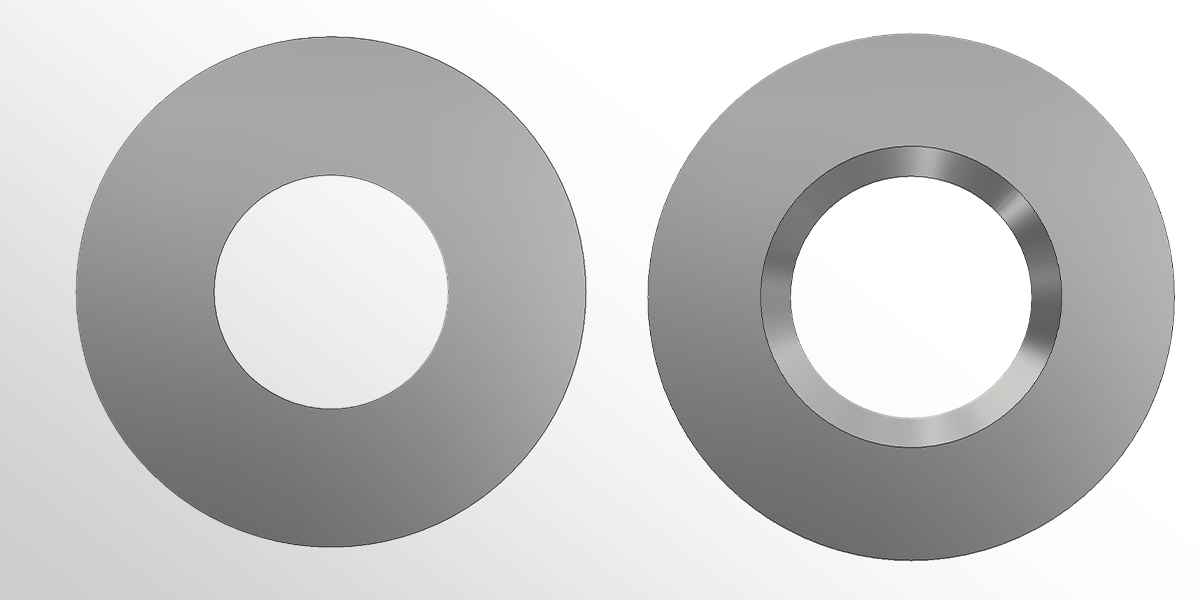
An orifice plate is a metal plate with a precisely sized opening, or bore, installed within a pipeline.
As fluid passes through the opening, its velocity increases and its static pressure decreases, creating a pressure difference between the upstream and downstream sides of the plate.
This pressure difference provides the basis for calculating the flow rate.
Orifice plates are commonly used in industrial applications because they offer a relatively straightforward measurement method, contain no moving parts and can be incorporated into a wide range of process piping systems.
They are used for measuring the flow of liquids, gases and steam, provided the plate and complete measurement system are appropriately designed for the operating conditions.
An orifice plate works by creating a controlled restriction in the flow path.
Fluid passes through the orifice plate, creating a Differential Pressure (DP) measured across the restriction.
The process can be explained in four steps:
For a given orifice geometry and stable fluid conditions, volumetric flow rate is approximately proportional to the square root of differential pressure. Accurate calculations also need to account for factors such as fluid density and the plate's discharge characteristics.
This is why proper plate selection, manufacturing quality, and installation are important to reliable flow measurement.
Orifice plates are suitable for many industrial applications where a differential pressure measurement system can be designed around the process requirements.
Even a precisely manufactured orifice plate can produce unreliable measurements if the installation conditions are unsuitable.
When planning an orifice plate installation, several factors should be considered:
ISO 5167-2:2022 provides standardized requirements for the geometry and use of certain orifice plates in flow measurement, including installation and operating conditions. The applicable requirements depend on the measurement arrangement and service conditions.
For facilities selecting flow instrumentation, these considerations help ensure that the complete measurement system is appropriate for the intended application.
At Aircom, we understand that reliable flow measurement starts with the quality of the components used in the measurement system.
That is why we distribute orifice plates manufactured by a world leader in plate fabrication, with each plate produced to stringent requirements and subjected to rigorous testing before being accepted by Aircom.
Our orifice plates are manufactured with attention to the details that matter for industrial flow measurement.
Stainless steel is specifically purchased for the required application, and individual plates are water-cut to avoid the heat distortion that can occur with conventional thermal cutting processes.
Specialized finishing machines achieve a surface finish of less than 30 micro-inches while helping preserve plate flatness.
Plates are lightly stamped with the material heat number, tag number, rating and bore size to support identification and verification.
Each plate undergoes final Coordinate Measuring Machine (CMM) inspection to verify that the finished product meets the specified requirements.
These manufacturing and inspection practices are described in Aircom's product documentation.
Aircom's product range includes:
These options allow customers to select an appropriate plate configuration based on their piping arrangement, measurement objectives and process requirements.
Industrial flow measurement plays an important role in process monitoring and control. For applications using differential pressure flow measurement, the orifice plate is a fundamental part of the system.
Selecting the right plate requires consideration of the fluid, operating conditions, installation requirements and measurement objectives.
At Aircom, we provide access to precision-manufactured orifice plates designed to meet demanding industrial requirements, supported by detailed manufacturing processes, product identification and inspection.
Looking for the right orifice plate for your industrial flow measurement application?
Explore our range of flow and restriction orifice plates, review available configurations and connect with the Aircom team to discuss your requirements.
Find product configurations, technical catalogue information and contact details for your next flow instrumentation project.
An orifice plate is commonly used to measure the flow rate of liquids, gases and steam in industrial piping systems. It creates a controlled restriction in the flow path, producing a pressure difference that can be measured and used to calculate flow rate.
Orifice plates can also be designed for pressure reduction applications, although restriction orifice plates serve a different purpose from those used for flow measurement.
An orifice plate flow meter works by creating a pressure difference as fluid passes through a precisely sized opening in the plate.
A differential pressure transmitter measures the pressure difference between the upstream and downstream sides of the plate. The measurement system then uses this information, together with the plate geometry and relevant fluid properties, to calculate the flow rate.
An orifice plate is the primary flow element that creates a measurable pressure difference in the pipeline.
A differential pressure flow meter is the complete measurement arrangement, which typically includes an orifice plate or another primary flow element, pressure connections, a differential pressure transmitter and the equipment needed to calculate or display the flow rate.
Yes. Orifice plates are commonly used for gas flow measurement in industrial applications, including natural gas and process gas systems.
For accurate measurement, the system must account for gas properties, operating pressure, temperature, density and the applicable installation requirements.
A flow orifice plate is designed to create a measurable differential pressure that can be used to calculate flow rate.
A restriction orifice plate is primarily designed to create a specified pressure drop or limit flow within a process system.
Although both introduce a restriction into the pipeline, they have different design objectives and should be selected according to the intended application.
Orifice plates offer several practical advantages, including:
However, orifice plates create a permanent pressure loss and require appropriate installation conditions, so they may not be suitable for every application.
Proper orifice plate installation is essential for accurate flow measurement.
Important considerations include the plate's bore size, alignment, flow direction, upstream and downstream piping conditions, pressure tap locations and material compatibility.
The required installation arrangement depends on the plate design, piping configuration, process conditions and applicable measurement standards.
Yes. Aircom distributes precision-manufactured orifice plates produced by a world leader in plate fabrication, including universal-style and paddle-style configurations for both flow measurement and pressure restriction applications.
Our orifice plates are manufactured with attention to dimensional accuracy, surface finishing, identification and inspection to help meet demanding industrial requirements.